
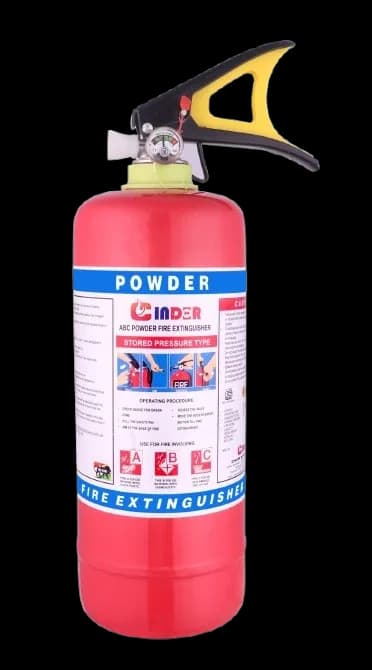
Extinguishers
ABC Powder Extinguisher
Stored pressure powder type, MAP 40%. Available in 2 kg, 4 kg, 6 kg and 9 kg.
Sizes4 options
2 kg, 4 kg, 6 kg, 9 kgCompare the products below, their applications and specifications, and move directly into the one that fits your project.
Extinguishers
Stored pressure powder type, MAP 40%. Available in 2 kg, 4 kg, 6 kg and 9 kg.
Sizes4 options
2 kg, 4 kg, 6 kg, 9 kg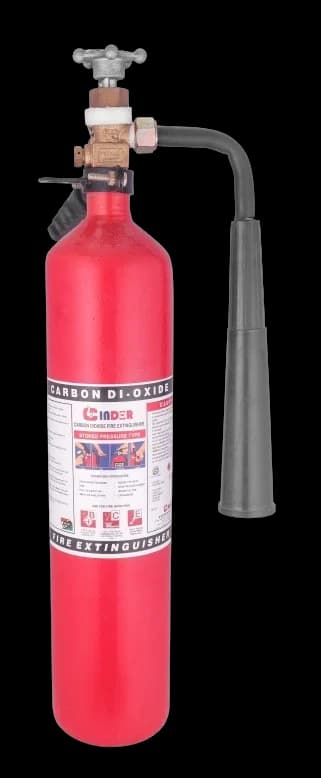
Extinguishers
Carbon dioxide, non-conductive, no residue. Available in 2.2 kg and 4.5 kg.
Sizes2 options
2.2 kg, 4.5 kg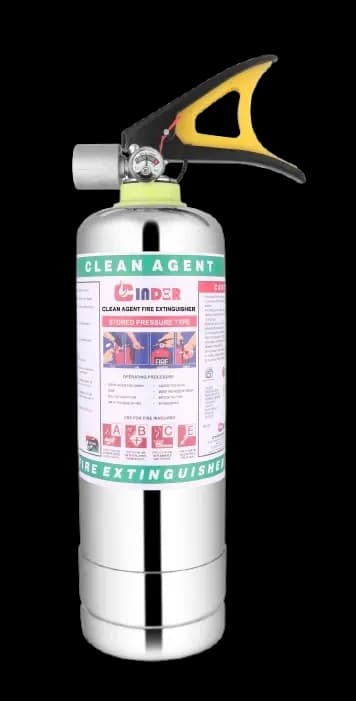
Extinguishers
Residue-free FK 5-1-12 / HFC 227ea. Available in 2 kg and 4 kg.
Sizes2 options
2 kg, 4 kg
Extinguishers
AVD chemical for lithium-ion battery fires. Available in 2 kg and 4 kg.
Sizes2 options
2 kg, 4 kg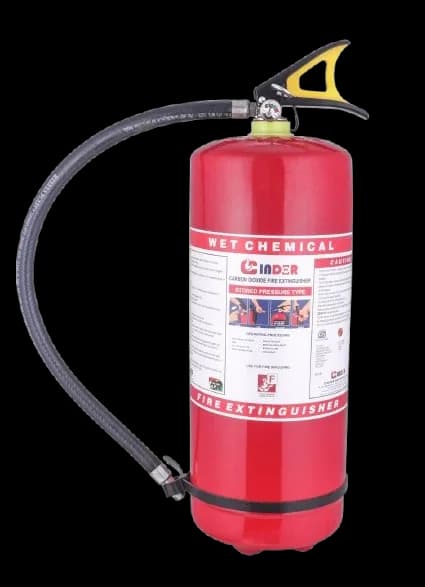
Extinguishers
9 kg wet chemical, 75F rated - deep fat fryers and commercial kitchens.
Stored pressure type portable fire extinguishers covering powder, clean agent, lithium-ion battery, wet chemical and CO₂ applications, marked to IS 15683 : 2018.
Portable extinguishers should be selected for the actual fire risks at the location. Powder, clean agent, CO₂, wet chemical and battery-focused products have different applications and limitations. A larger charge does not make an agent suitable for a different hazard, and equal capacities do not necessarily mean equal tested performance. Compare the marked fire rating, model, capacity and discharge information for each unit. Also consider the people expected to handle it, its location, training and service arrangements. The catalogue below groups sizes within each product family so you can compare variants without confusing a model number with a separate extinguishing technology.
No. First match the agent and marked fire rating to the hazard. Then compare handling, discharge information, location and service arrangements. Capacity alone does not establish suitability.
Powder leaves residue, while clean-agent products are intended for applications where residue is a concern. The final choice still depends on the hazard, the selected model rating and the site assessment.
Tell us about the space you need to protect and an engineer will recommend the right system.
ABC powder is offered for mixed-risk applications but leaves powder residue. Clean-agent units are relevant when residue is an important selection factor. CO₂ units require attention to the discharge and the surrounding space. Wet chemical is the cooking-oil option in this catalogue. Battery hazards need a separate review of chemistry, size and the evidence behind the proposed product.
Compare the selected variant's marked fire rating, charge and discharge information. A capacity such as 4 kg describes quantity, not universal coverage. Fire-class terminology differs between standards, so check the actual label and documentation used for the project. Request the current certificate and test information for the exact model being supplied, including the scope of any claimed approval.
Ask where the unit can be inspected and refilled, which replacement parts are available and how out-of-service units are covered. Include brackets or stands and location identification in the quotation where needed. Agree the inspection and maintenance arrangements with a competent provider using the manufacturer's instructions and applicable site requirements.
Send the site use, hazard list, requested quantities and any existing fire assessment. If replacing units, include photographs of the labels and mounting arrangements. Portable extinguishers form one part of fire protection; they do not replace an evacuation plan, training or a fixed system where the project requires one.